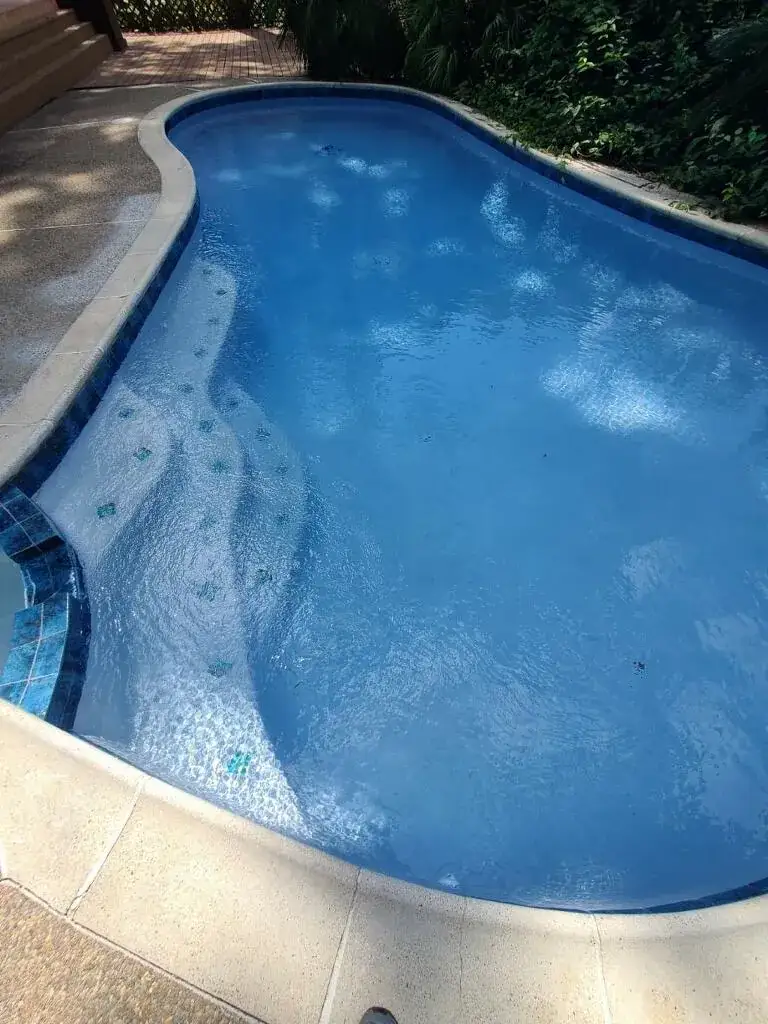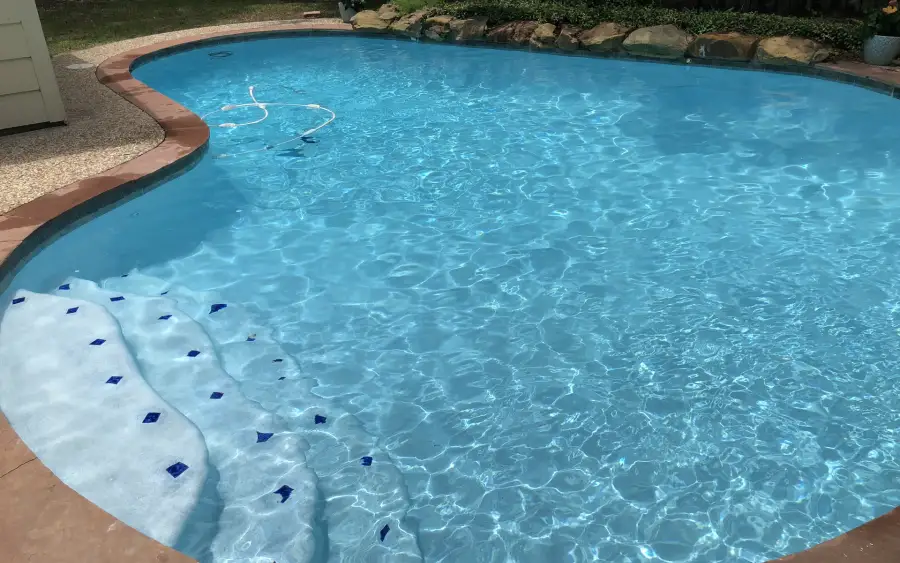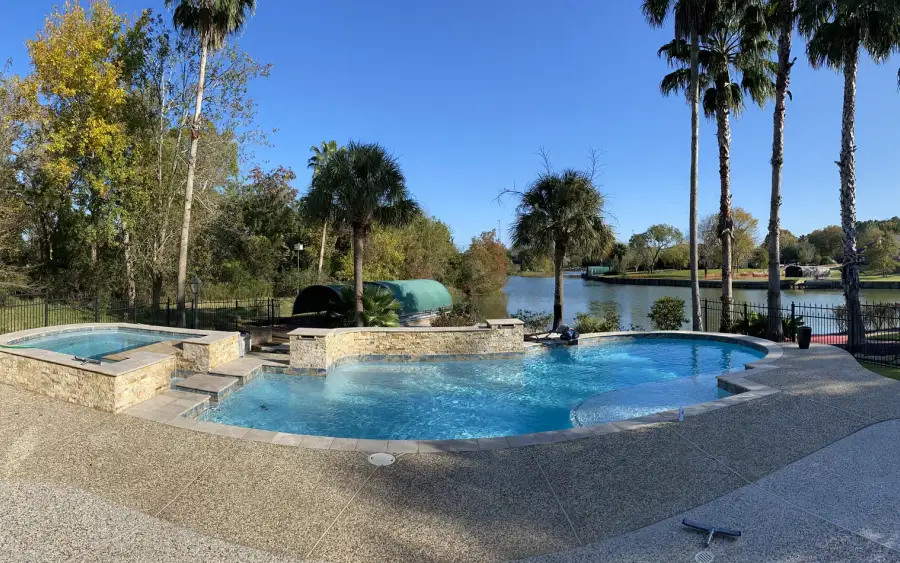

Every Houston pool loses water in summer. A quarter of an inch a day to evaporation is common when it is hot and breezy. The question is whether yours is losing more — and the bucket test answers it for the cost of a bucket.
You will need
- A plastic bucket
- Water from the pool
- A marker or tape
- Two or three days without heavy rain
How to do it
- Put the bucket on the pool’s first or second step, so it sits in the pool water at the same temperature.
- Fill the bucket with pool water to roughly the same level as the pool.
- Mark the water level inside the bucket, and mark the pool level on the tile or skimmer.
- Run the pump as normal and leave everything for 24 hours. Do not swim, top up or backwash.
- Compare the two drops. Measure how far the bucket level fell and how far the pool level fell.
- Repeat with the pump off for another 24 hours.
Reading the result
- Both dropped about the same: that is evaporation. Your pool is fine.
- The pool dropped noticeably more than the bucket: you have a leak.
- The pool dropped more only with the pump running: the leak is probably in the pressure-side plumbing or the equipment.
- The pool dropped more with the pump off too: look at the shell, light niche, skimmer or suction-side plumbing.
Common leak points
On older pools in Klein and North Houston, where clay soil has moved the ground for decades, the usual suspects are light niches, skimmer throats, return fittings and underground plumbing. Check the equipment pad too — some leaks are dripping in plain sight behind the fence.
What to do next
If the test points to a leak, do not wait. A leak keeps diluting the chemistry, and water escaping into clay can soften the ground under a deck. Our pool leak detection service finds it by measurement and line pressure testing before anyone cuts concrete — and we will show you exactly where it is before discussing the repair.