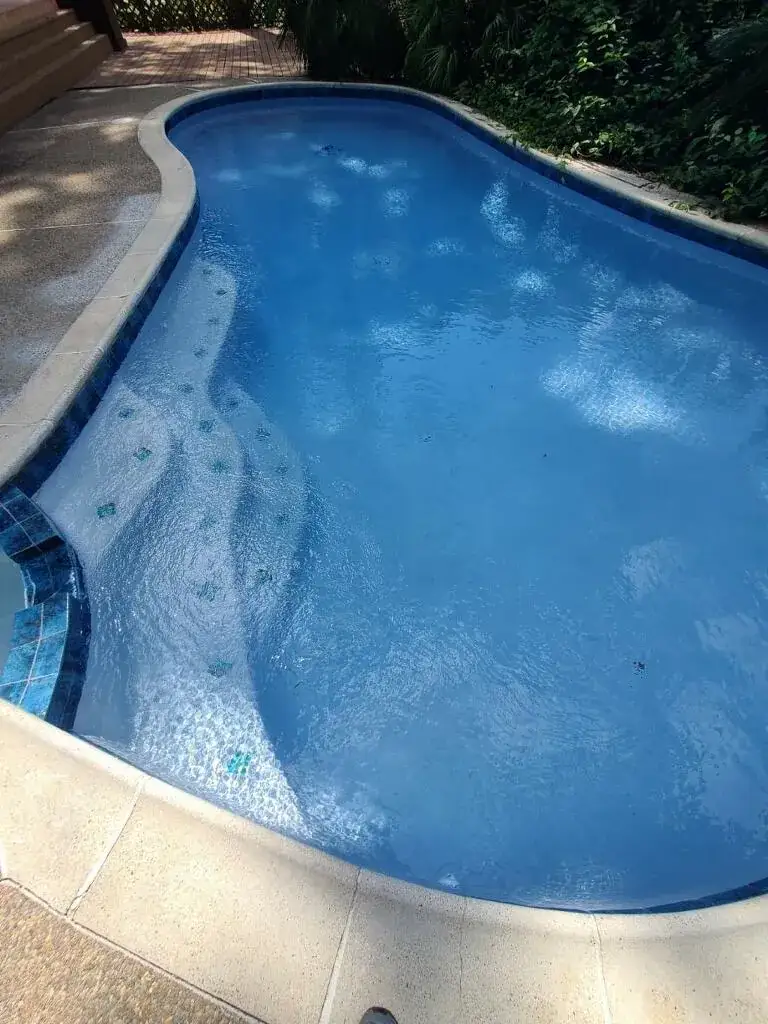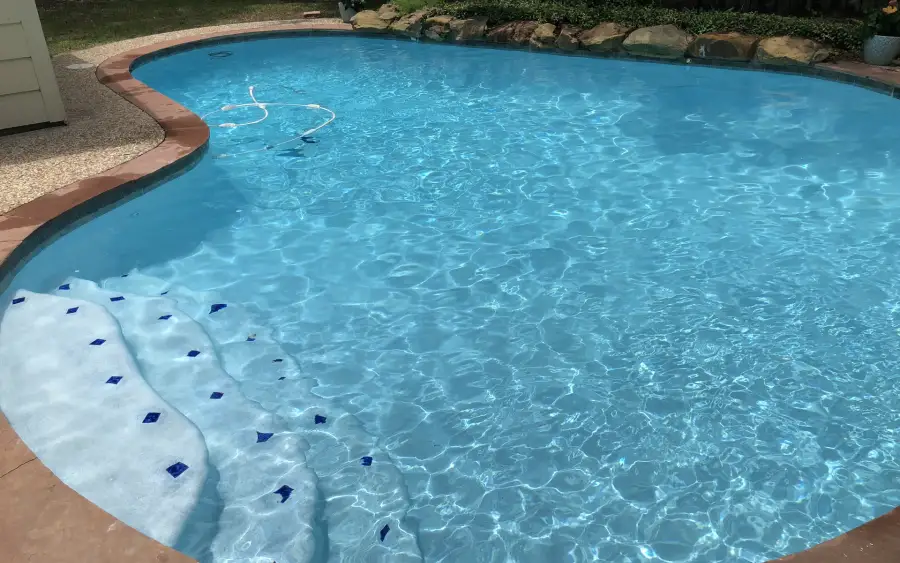
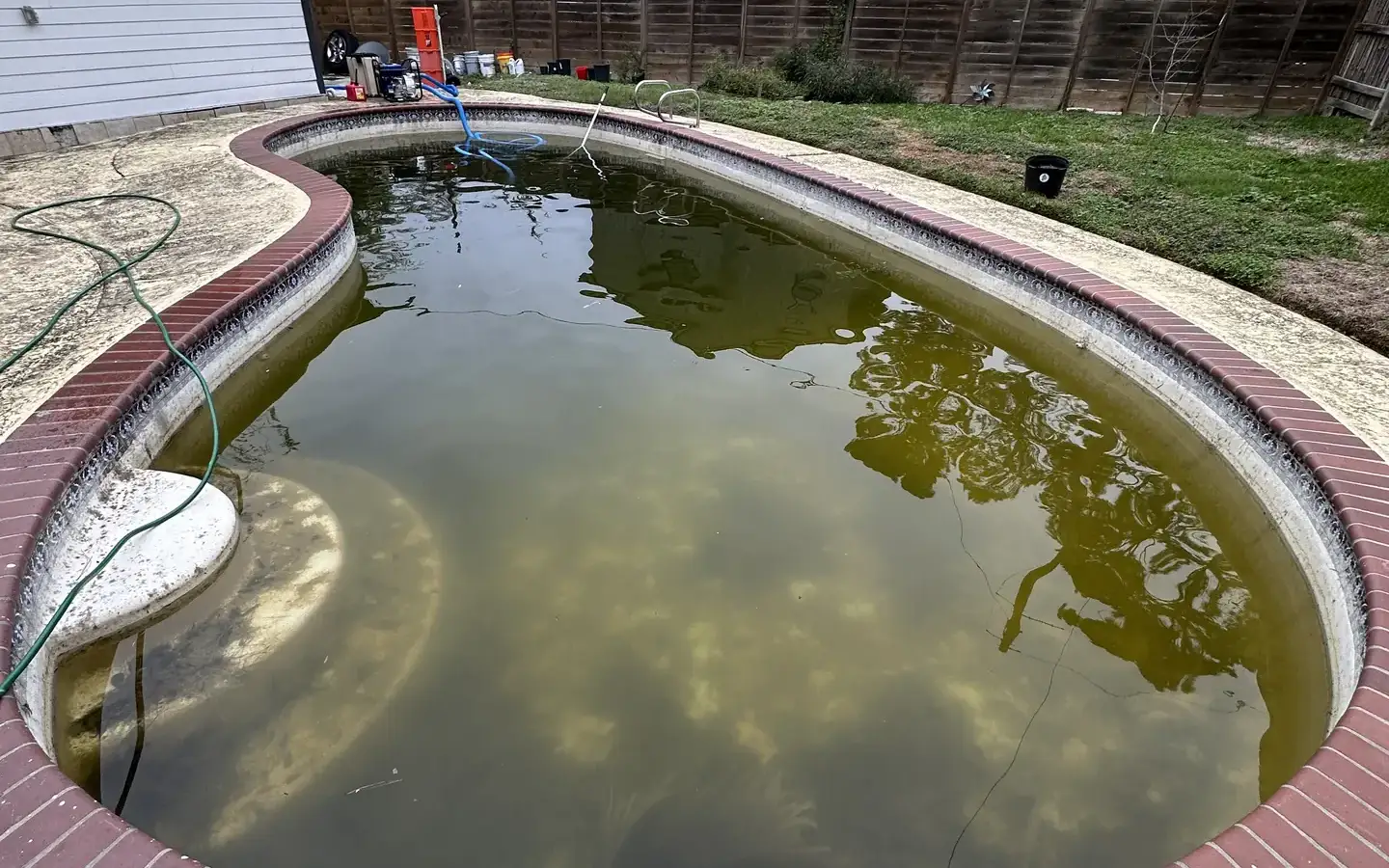
You go to bed with a clear pool, it rains for two days, and by the weekend it is green. It is one of the most common calls we get in Houston, and it is not bad luck — it is chemistry.
What rain does to a pool
It dilutes the chlorine. Several inches of rain add a lot of fresh water with no sanitiser in it. Chlorine levels drop just when the pool needs them most.
It washes things in. Runoff from the yard brings soil, fertiliser, pollen and leaves. Fertiliser and organic matter are food for algae.
It shifts the pH. Rainwater can push the water balance off, which makes the remaining chlorine less effective.
It is warm. Houston pool water in summer is ideal for algae. Put all four together and a pool can turn in 48 hours.
Stopping it before it starts
- Test and shock after every big storm. Do it as soon as the rain stops.
- Keep the pump running through the storm and afterwards, as long as the power is on and the pad is not flooded.
- Clear baskets and skim debris before it sinks.
- Lower the level if the pool is overflowing, so the skimmer works.
Flat, slow-draining neighbourhoods — much of Cypress, parts of Humble and Atascocita — take more runoff into pools. Heavily wooded areas like Kingwood get more leaves and pollen. Both need faster attention after storms.
Clearing a green pool
Remove the debris first, then brush the walls and floor hard, shock the water, and run the filter continuously — cleaning it repeatedly as it catches dead algae. A lightly green pool can clear in a day or two; a dark green one can take several visits. Resist draining it: it is rarely necessary, and an empty pool in wet Houston ground can be lifted by groundwater.
If it has got away from you, our green pool clean-up service will bring it back. And if you would rather it never happened again, weekly pool maintenance includes post-storm checks.